
How Much Protein Do You Need for Weight Loss?

6 min read
Protein gets talked about constantly in nutrition, but most people still aren’t sure how much they actually need.
Some people think they need huge amounts to lose weight.
Others barely think about protein at all.
The reality is somewhere in the middle.
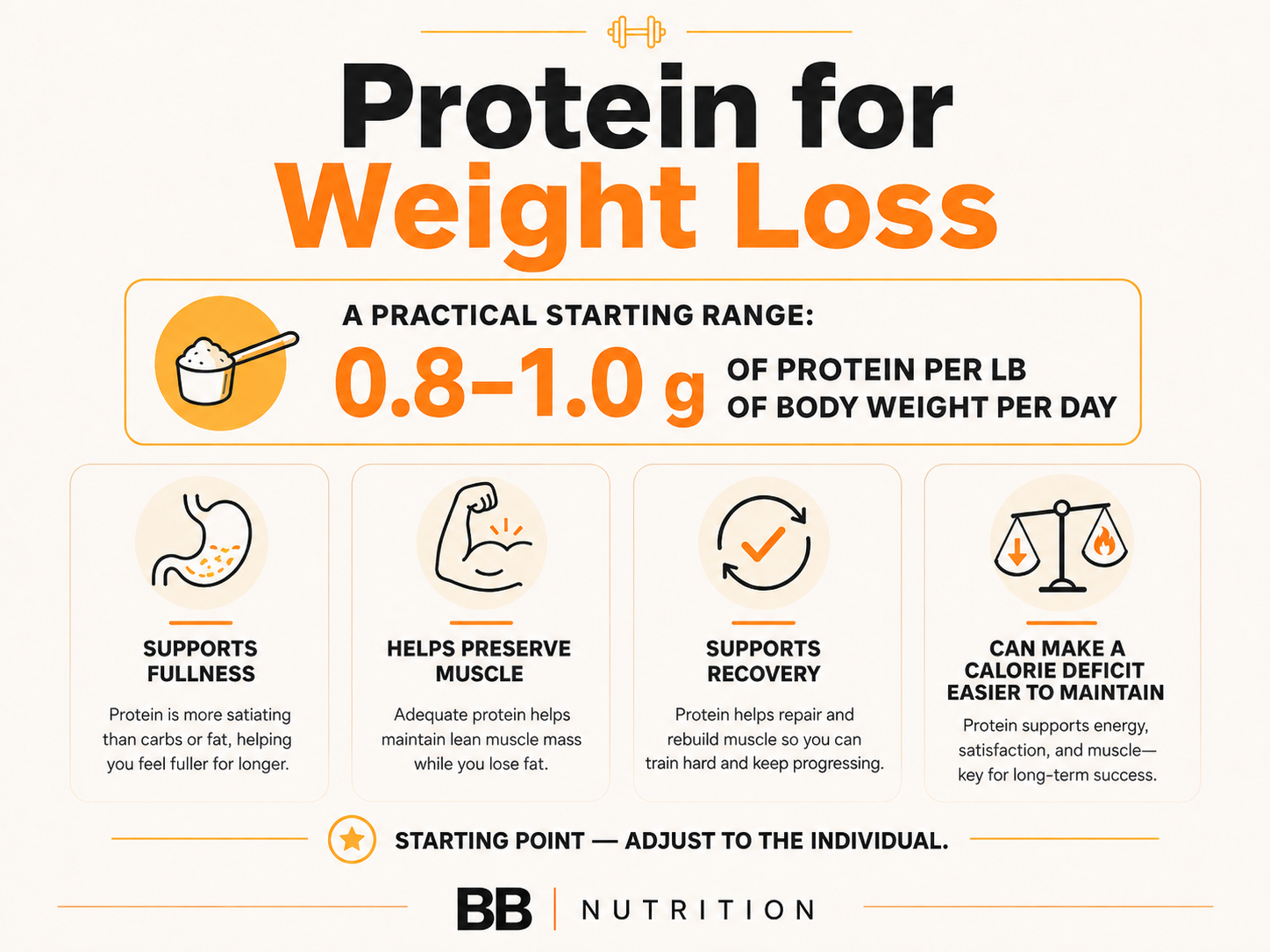
Protein can be extremely helpful during weight loss because it can support fullness, help preserve muscle, and make meals more satisfying.
But just like calories, there isn’t one perfect protein number that works for everyone.
The goal is to find a practical intake that supports your body, your activity level, and your weight-loss plan.
Why Protein Matters During Weight Loss
When you’re trying to lose weight, you’re usually eating fewer calories than your body burns.
That calorie deficit is what drives weight loss.
The challenge is that when calories are reduced, you don’t want to lose unnecessary muscle along with body fat.
Protein helps by supporting muscle retention, especially when it’s combined with resistance training.
Protein also tends to be more filling than carbohydrates or fats, which can make it easier to stay satisfied while eating fewer calories.
That means protein can help in two important ways:
support muscle while dieting
make your calorie deficit easier to maintain
How Much Protein Should You Eat?
For most people trying to lose weight, a practical target is somewhere around:
0.8–1.0 grams of protein per pound of body weight per day
You don’t need to hit the very top of that range automatically.
Your ideal intake depends on:
body size
activity level
how lean you are
training volume
calorie intake
appetite
personal preference
Someone who is very active, resistance trains regularly, or is already relatively lean may benefit from being closer to the higher end.
Someone who is less active or has a significant amount of weight to lose may not need to base protein on their full current body weight.
In those cases, using a target body weight can sometimes be more practical.
A Simple Example
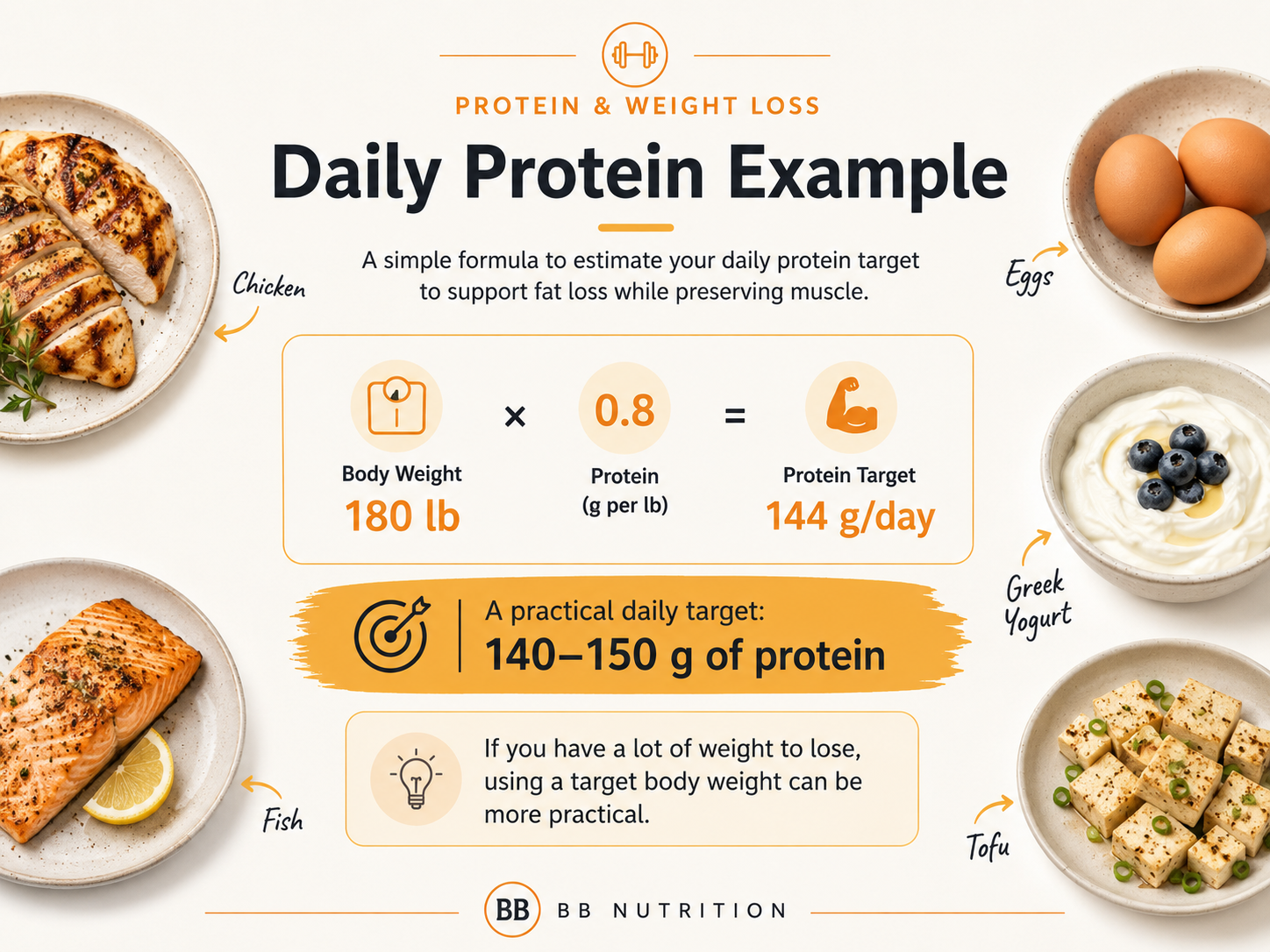
Let’s say someone weighs 180 pounds and wants to lose weight.
Using a moderate target of around:
0.8 grams per pound
That would look like:
180 × 0.8 = 144 grams of protein per day
That doesn’t mean they need exactly 144 grams every single day.
It gives them a reasonable target to work around.
They might aim for roughly:
140–150 grams per day
That’s much easier to apply in real life than obsessing over a perfect number.
What If You Have a Lot of Weight to Lose?
This is where protein recommendations can get confusing.
If someone weighs 300 pounds, telling them to eat 300 grams of protein per day usually isn’t necessary or practical.
In that situation, a better approach may be to base protein intake on:
target body weight
estimated lean body mass
or a more moderate intake that fits their calorie target
For example, if someone currently weighs 300 pounds but is working toward 220 pounds, using the target body weight may make more sense.
At 0.8 grams per pound:
220 × 0.8 = 176 grams of protein
That’s still a substantial amount of protein without making the target unnecessarily high.
Protein Can Help With Hunger
One of the biggest reasons I like prioritizing protein during weight loss is simple:
It can make dieting feel easier.
A meal that includes a solid protein source is often more satisfying than one built mostly around low-protein carbohydrates or fats.
That can help reduce the constant urge to snack or feel like you’re starving between meals.
Good protein options include:
chicken
turkey
lean beef
fish
eggs
Greek yogurt
cottage cheese
tofu
tempeh
lentils
protein powder
You don’t need every meal to be massive.
You just want protein to be a consistent part of your day.
Spread Protein Across the Day
Instead of eating very little protein all day and then trying to cram most of it into dinner, it’s usually easier to distribute it throughout your meals.
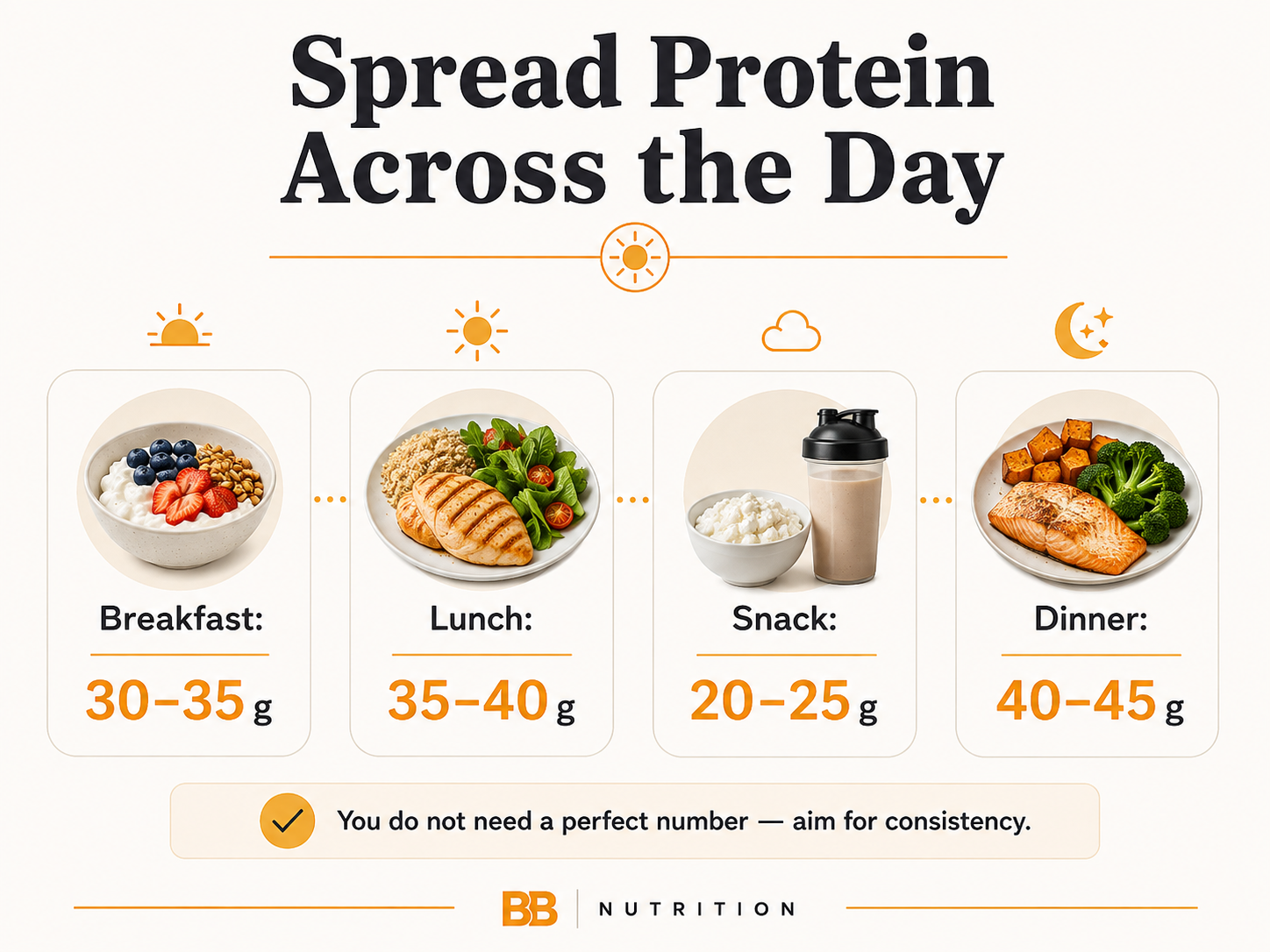
For example, someone aiming for around 140 grams per day might spread it like this:
Breakfast: 30–35 g
Lunch: 35–40 g
Snack: 20–25 g
Dinner: 40–45 g
That gives you several opportunities throughout the day to hit your target without making any one meal ridiculous.
It can also make meals more filling and help support training and recovery.
Do You Need Protein Immediately After a Workout?
You don’t need to panic if you don’t get a protein shake within 30 minutes of training.
That idea has been exaggerated over the years.
What matters most is your total protein intake over the day.
That said, eating a protein-containing meal within a reasonable period after training is still a good idea, especially if you haven’t eaten for several hours.
The bigger picture matters more than the exact minute you drink a shake.
Does More Protein Mean Faster Weight Loss?
No.
Protein is helpful, but it doesn’t override calories.
You can eat a very high-protein diet and still fail to lose weight if your total calorie intake is too high.
That’s why protein should be viewed as one part of the plan.
You still need an overall calorie intake that supports weight loss.
If you’re not sure where to start with calories, read:
How Many Calories Should You Eat to Lose Weight?
That article gives you a simple way to estimate your starting calorie intake based on body weight and activity level.
Don’t Let Protein Push Calories Too High
This is another common mistake.
People hear that protein is good for weight loss, so they start adding:
extra shakes
protein bars
peanut butter
large portions of meat
high-calorie “high-protein” snacks
Then their total calorie intake climbs much higher than they realize.
Protein is useful, but it still contains calories.
The goal is not to add unlimited protein on top of your current diet.
The goal is to structure your meals so protein fits within your calorie target.
Tracking Can Help You See Where You Stand
A lot of people assume they eat plenty of protein until they actually track it.
Then they realize breakfast had 8 grams, lunch had 15, and most of their protein came from dinner.
Tracking your intake for a week can give you a much clearer picture.
You may notice that you need to:
add more protein at breakfast
choose a higher-protein lunch
include a protein-based snack
slightly increase your dinner portion
If you want a simple breakdown of how tracking can help, read:
Why Tracking Your Food Intake Can Help With Weight Loss
Protein Is Important, But Consistency Still Matters Most
Protein is not magic.
You do not need to hit a perfect number every day.
If your target is 150 grams and you eat 140 one day and 155 the next, nothing bad happens.
Think in terms of consistency.
If most days you are:
eating enough protein
staying within your calorie target
training consistently
managing hunger
and progressing over time
then you’re doing what matters.
Final Thoughts
Protein can be a very useful tool for weight loss.
It can help you:
stay fuller
preserve muscle
recover from training
and make your calorie deficit easier to maintain
For many people, a practical starting range is around:
0.8–1.0 grams per pound of body weight per day
But the exact amount should fit the individual.
You do not need to chase extreme numbers.
You need an intake that is high enough to support your goals and realistic enough to maintain.
Consistency over perfection.
If you’re unsure how much protein you should be eating or how to fit it into your calorie target, personalized nutrition coaching can help simplify the process.
