
Why Tracking Your Food Intake Can Help With Weight Loss
5 min read
When it comes to weight loss, awareness matters.
You can train hard, eat mostly nutritious foods, and feel like you’re doing everything right—but if you don’t have a clear idea of how much you’re actually eating, it can be difficult to know whether your intake matches your goals.
That’s where food tracking can help.
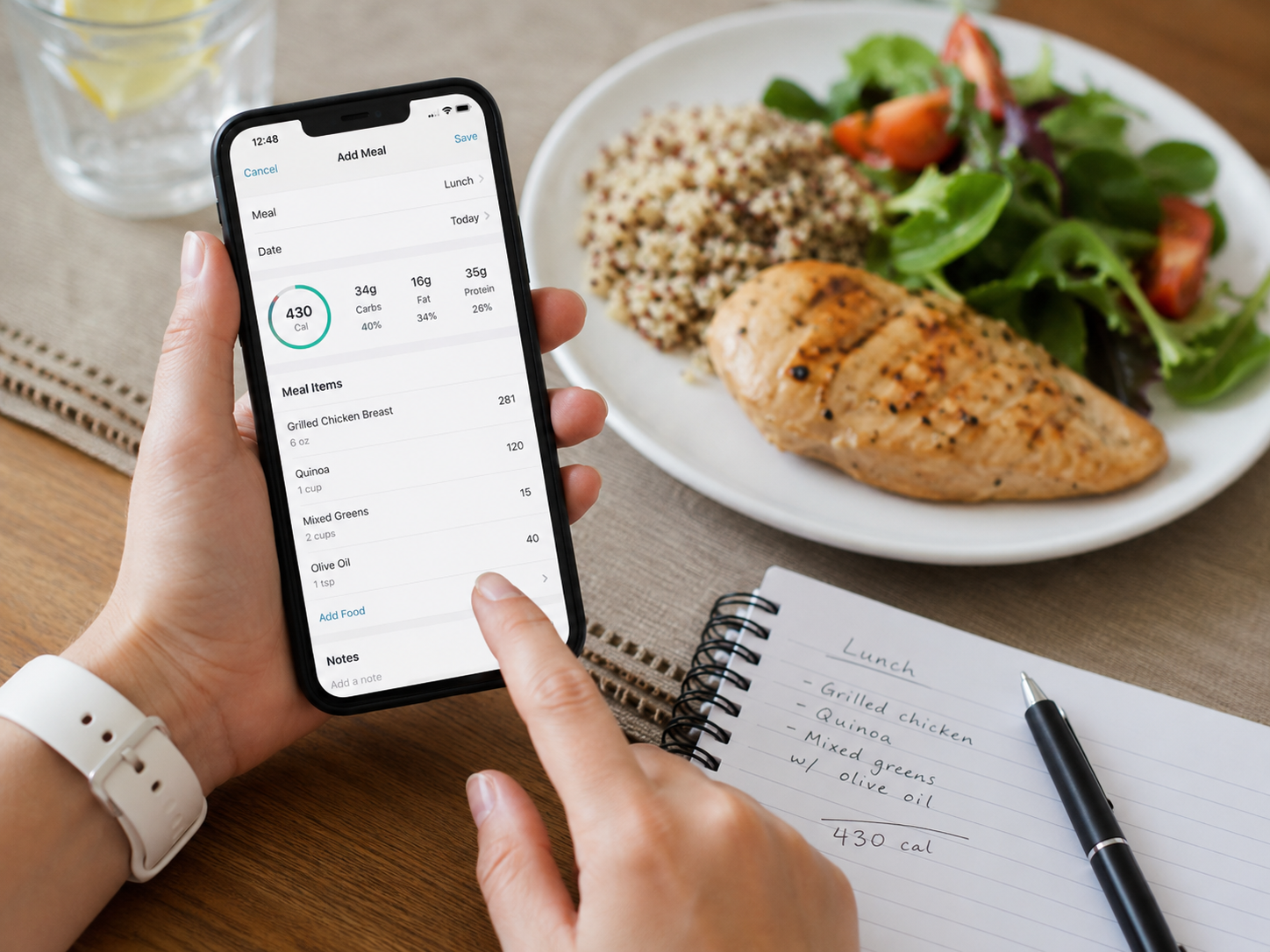
Tracking doesn’t have to mean weighing every gram of food forever. It can be as detailed as using a food-tracking app or as simple as taking photos of your meals. The goal is to create awareness, identify patterns, and give yourself useful information you can act on.
1. It Builds Awareness and Accountability
A lot of people feel like they eat “pretty healthy,” but healthy foods can still add up in calories.
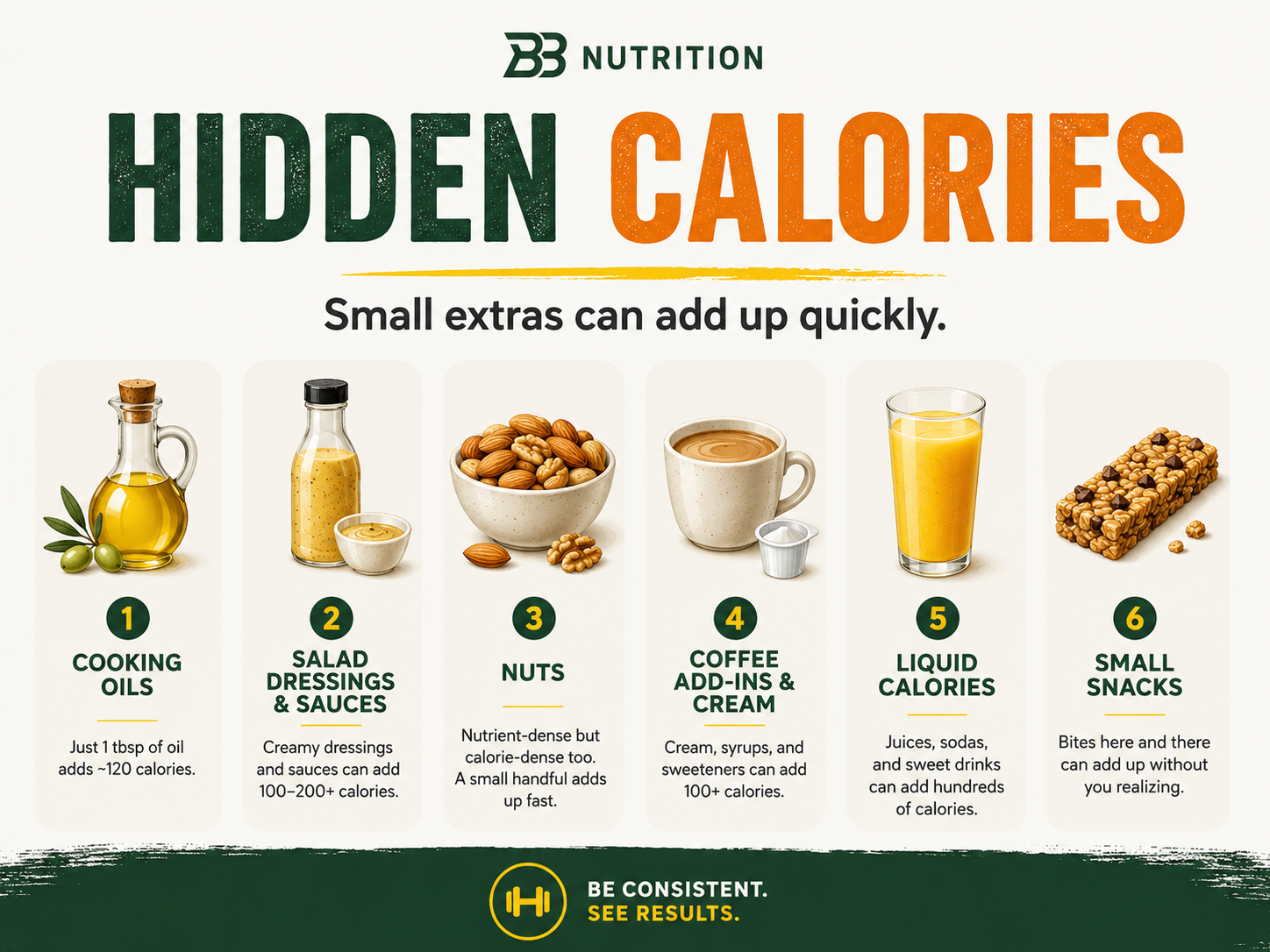
Small extras are easy to overlook:
Cooking oils
Cream or sugar in coffee
Sauces and dressings
Snacks
Larger portions
Drinks
A few bites while preparing food
Weekend meals
None of these foods are automatically a problem. The issue is that small amounts can add up enough to reduce or completely erase the calorie deficit you thought you were creating.
Tracking your intake forces you to slow down and notice what you’re actually consuming.
That alone can make your choices more intentional.
2. It Helps Reveal Hidden Calories
Sometimes the problem isn’t your main meals.
It’s everything around them.
You may have a balanced breakfast, lunch, and dinner, but things like cooking oil, handfuls of nuts, restaurant sauces, drinks, or extra snacks can quietly increase your daily intake.
Tracking can help you identify patterns such as:
Eating more on weekends
Snacking more at night
Underestimating portion sizes
Drinking more calories than expected
Adding more sauces, oils, or toppings than you realize
Once you can see those patterns, you can make adjustments instead of guessing.
3. It Gives You Data to Adjust What Isn’t Working
If your weight-loss progress stalls, having some kind of food record gives you useful information to work with.
Instead of immediately blaming your metabolism or cutting calories aggressively, you can look at the bigger picture.
Ask yourself:
Have portion sizes increased?
Am I tracking consistently?
Has my protein intake dropped?
Are weekends significantly higher than weekdays?
Am I eating more restaurant meals?
Has my daily activity changed?
Food tracking gives you a starting point for making small, informed adjustments.
Without that data, it’s much easier to make unnecessary changes based on frustration.
4. It Doesn’t Have to Be Complicated
There isn’t one perfect way to track food.
The best method is the one you’re actually willing to use consistently.
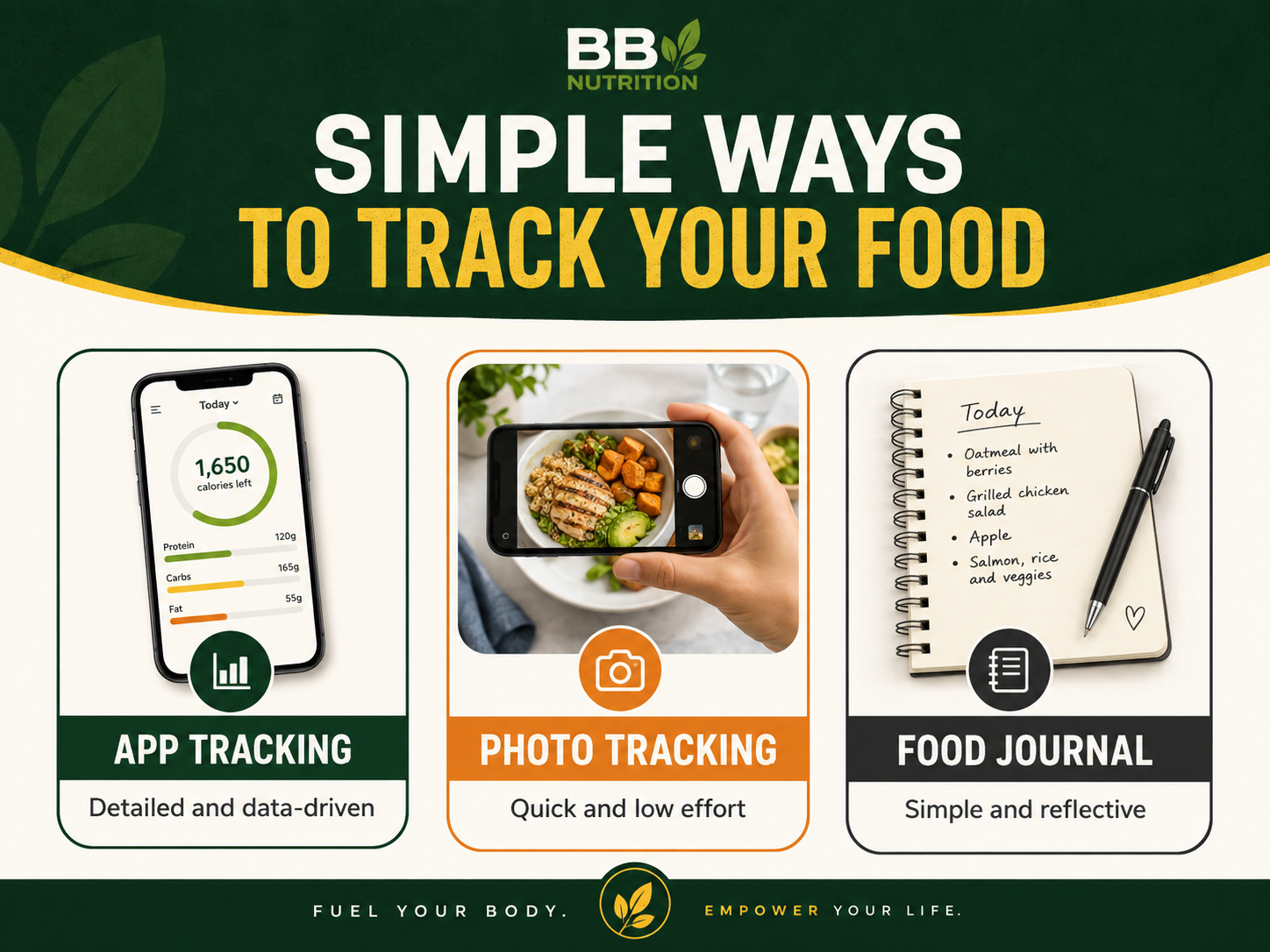
Some options include:
Food-tracking apps
Apps like MyFitnessPal or Cronometer can be useful if you want detailed information about calories and macronutrients.
Photo tracking
Taking a quick picture of each meal can help you become more aware of your eating habits without tracking every calorie.
Written food journal
Writing down what you eat can help you identify patterns around portions, hunger, meal timing, and snacking.
Simple meal structure
Some people may not need detailed tracking at all. Following a consistent meal structure and monitoring progress can be enough.
The goal isn’t perfection.
It’s finding a level of tracking that gives you useful information without making nutrition feel overwhelming.
5. It Can Help You Make More Intentional Choices
When you know you’re paying attention to what you eat, you’re often more likely to pause before making an automatic choice.
That doesn’t mean choosing the “healthiest” food every time.
It means becoming more intentional.
Maybe you decide you’d rather have dessert after dinner than snack mindlessly throughout the afternoon.
Maybe you choose a higher-protein lunch because you know it keeps you fuller.
Maybe you notice that liquid calories aren’t very satisfying and decide you’d rather use those calories somewhere else.
Over time, those small decisions can make it easier to stay consistent.
Tracking Should Be a Tool, Not a Punishment
Food tracking can be extremely useful, but it shouldn’t make you feel anxious, guilty, or afraid of eating.
The purpose is to gather information—not to judge yourself.
You also don’t necessarily need to track forever.
For many people, tracking for a period of time can help them better understand portions, calories, protein intake, and eating habits. Once those skills become more automatic, they may be able to use a less detailed approach.
Final Thoughts
Tracking your food isn’t about restriction.
It’s about awareness.
When you have a clearer picture of what you’re eating, you can make better decisions, recognize patterns, and adjust your plan based on real information instead of guesswork.
Start with a method that fits your lifestyle and use it consistently for a few weeks.
You may be surprised by what you learn.
Consistency over perfection.
If you’re struggling to figure out how much you should be eating or what adjustments to make, personalized nutrition coaching can help simplify the process and create a plan that works with your lifestyle.
