
Why You’re Not Losing Weight Anymore — And What to Do About It
6min read
Weight loss rarely happens in a perfectly straight line.
You may start a new nutrition plan, see the scale moving consistently, and feel like everything is working exactly as planned. Then suddenly, progress slows down or stops altogether.
That can be frustrating, but it doesn’t necessarily mean you’re doing something wrong. As your body weight, activity levels, eating habits, and energy needs change, your plan may need to change with them.
Here’s why weight-loss plateaus happen and what you can do to get progress moving again.
Why Weight-Loss Plateaus Happen
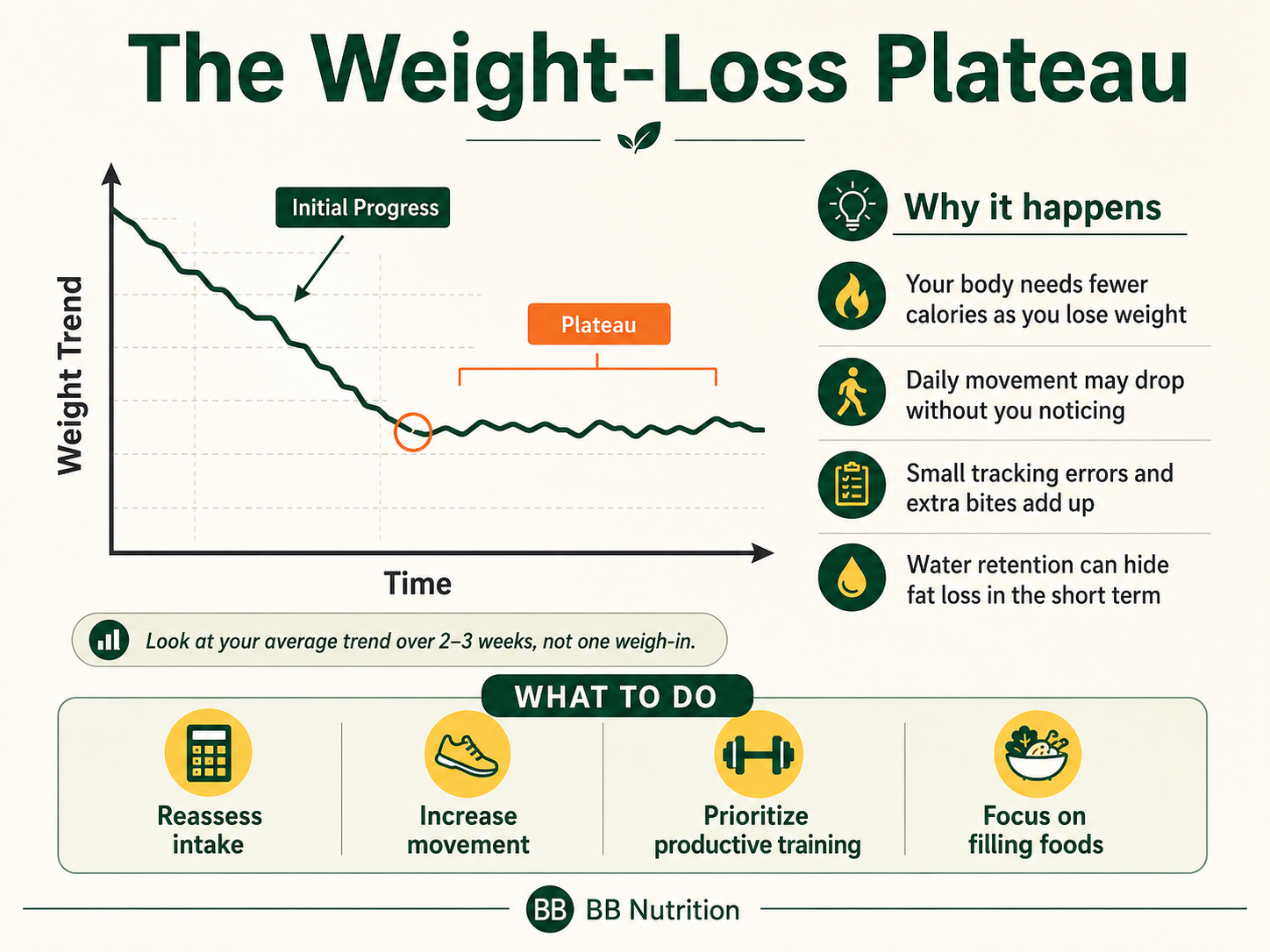
When you first start losing weight, changes to your food intake, activity levels, or both create a calorie deficit. In simple terms, you’re using more energy than you’re consuming, which causes body weight to decrease over time.
As you lose weight, however, your body generally requires fewer calories to maintain itself because there is less body mass to support and move around.
Your energy expenditure can also decrease during prolonged dieting. You may unconsciously move less throughout the day, training output may drop, and your body can adapt to prolonged calorie restriction by becoming somewhat more energy-efficient.
This means the calorie intake that created a noticeable deficit at the beginning of your diet may eventually create a much smaller deficit—or potentially no meaningful deficit at all.
That’s why a plateau doesn’t always mean your diet has “stopped working.” It may simply mean your current strategy needs to be adjusted.
Signs You May Have Hit a Plateau
Before making changes, make sure you’re actually dealing with a plateau and not just normal day-to-day fluctuations.
Some signs include:
Your average body-weight trend hasn’t decreased for 2–3 weeks or longer
Your measurements have remained relatively unchanged
Your progress photos look essentially the same
You’ve been consistent with your nutrition and activity, but your overall trend has stopped progressing
Remember, scale weight can fluctuate because of hydration, carbohydrate intake, sodium, digestion, stress, menstrual cycle changes, and many other factors.
That’s why looking at your weekly average is usually more useful than judging progress from a single weigh-in.
How to Break Through a Weight-Loss Plateau
1. Reassess Your Calorie Intake
Your calorie needs may be lower now than they were when you started.
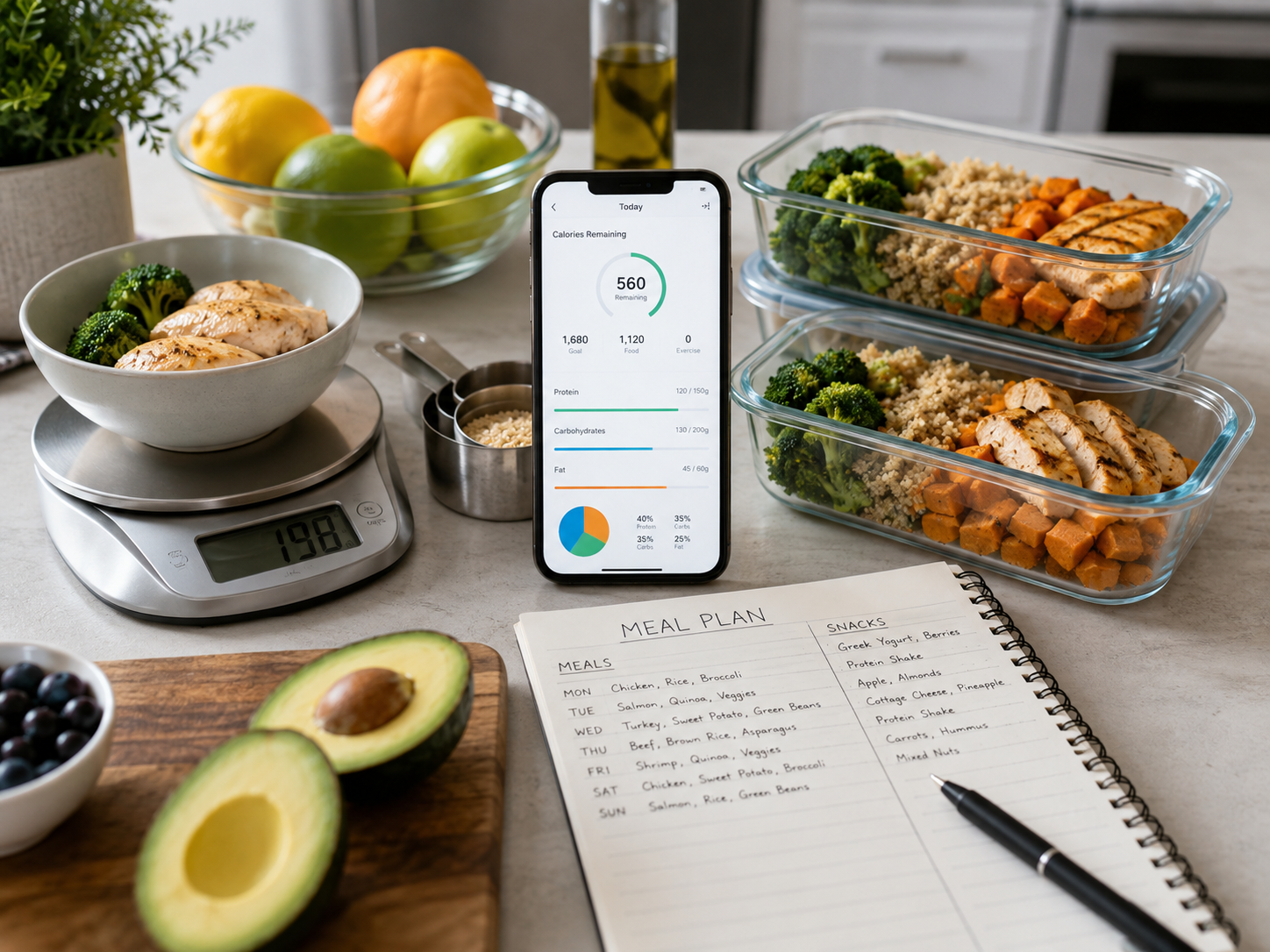
If you’ve lost a meaningful amount of weight, reassessing your current intake can help determine whether you’re still creating an appropriate deficit.
Before immediately cutting calories, also take an honest look at your tracking.
Small things can creep in over time:
Larger portions
Extra sauces and condiments
Cooking oils
Drinks
Snacks
Restaurant meals
Weekend eating
These may seem insignificant individually, but they can add up quickly.
If your tracking is consistent and an adjustment is needed, a small reduction of roughly 100–200 calories per day can sometimes be enough to get progress moving again.
The goal isn’t to make your diet as restrictive as possible. It’s to make the smallest effective adjustment and monitor the response.
2. Increase Your Daily Movement
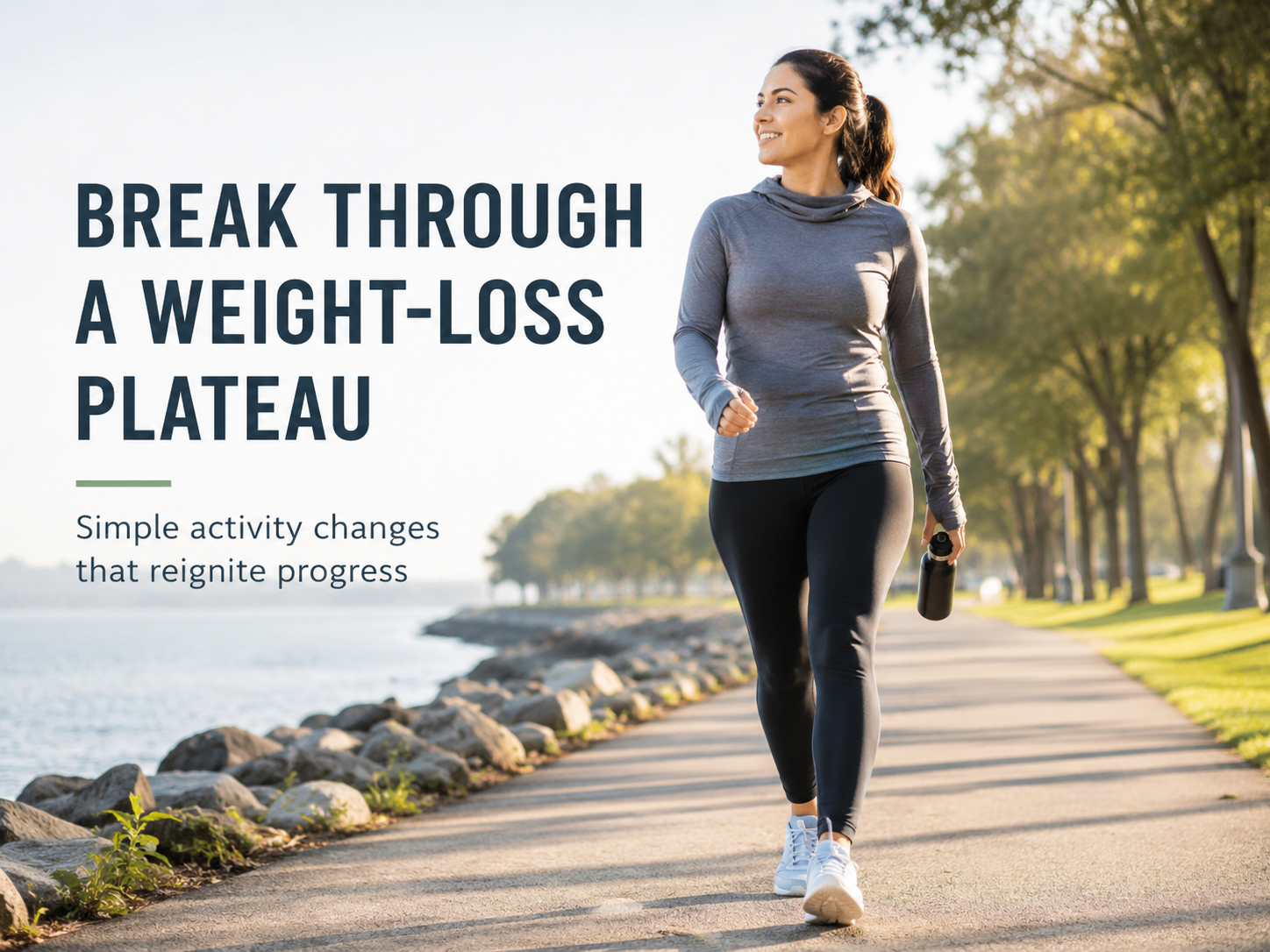
You don’t necessarily need to add another hour of cardio.
Increasing everyday movement can be an easier and more sustainable option.
You could:
Add an extra daily walk
Increase your step count
Take the stairs more often
Walk during phone calls
Do more household work
Spend more time standing and moving throughout the day
Daily movement outside of structured workouts can contribute significantly to your overall energy expenditure.
And during a calorie deficit, people sometimes move less without realizing it.
A small increase in movement can therefore make a meaningful difference.
3. Prioritize Productive Training
You don’t need to constantly change your workouts just to “confuse” your body.
Instead, focus on training that supports your overall goal.
Resistance training can be especially useful during weight loss because it helps provide a stimulus to maintain muscle mass while calories are reduced.
Your training might include:
Resistance training
Walking
Moderate cardiovascular exercise
Sports
Kickboxing
Interval training when appropriate
The best approach is one that you can recover from, perform consistently, and fit into your lifestyle.
More exercise isn’t automatically better. The goal is to create enough activity to support your progress without running yourself into the ground.
4. Improve Food Quality and Satiety
Calories still matter for weight loss, but food quality can make controlling those calories much easier.
Foods that are higher in protein, fibre, and overall volume tend to help you stay fuller and make a calorie deficit more manageable.
Some good options include:
Protein-rich foods
Chicken
Turkey
Eggs
Greek yogurt
Fish
Lean beef
Tofu
Lentils
Protein can help with fullness and support the maintenance of muscle mass during weight loss.
Fruits and vegetables
Broccoli
Spinach
Zucchini
Cauliflower
Leafy greens
Berries
Apples
Oranges
These foods can add volume, fibre, vitamins, and minerals without adding a large amount of calories.
Healthy fat sources
Avocado
Nuts
Seeds
Olive oil
Fat can absolutely be part of a healthy diet, but remember that it is calorie-dense, so portions still matter.
Carbohydrate sources
Potatoes
Rice
Oats
Quinoa
Whole-grain breads
Fruit
Carbohydrates can support training performance, energy levels, and overall diet satisfaction.
You don’t need to eliminate entire food groups to get through a plateau. Often, improving the structure of your meals is more effective than becoming more restrictive.
5. Consider a Diet Break
If you’ve been dieting for an extended period, a temporary period at maintenance calories may be worth considering.
A diet break generally means intentionally increasing calories to approximately your current maintenance level for a short period—often around one to two weeks—before returning to your calorie deficit.
This is not a binge or cheat period.
It’s a structured break from dieting that may help with:
Hunger
Diet fatigue
Training performance
Energy
Adherence
Psychological stress
A diet break doesn’t magically “reset” your metabolism, but for some people it can make the overall dieting process easier to maintain.
And sometimes improving adherence is exactly what you need to continue making progress.
Don’t React Too Quickly
One of the biggest mistakes people make is changing their plan every time the scale stops moving for a few days.
Weight loss is noisy.
A salty restaurant meal, higher carbohydrate intake, harder training session, poor sleep, constipation, or increased stress can temporarily increase scale weight without representing an increase in body fat.
Give your body enough time to show you a trend before making changes.
Look at several weeks of data rather than reacting emotionally to a couple of weigh-ins.
Final Thoughts
A weight-loss plateau isn’t failure.
It’s feedback.
If your progress has genuinely stalled, take a look at your calorie intake, tracking consistency, daily movement, training, food choices, recovery, and overall adherence before deciding what needs to change.
Most importantly, avoid responding by immediately slashing calories or dramatically increasing exercise.
Make thoughtful adjustments, monitor the results, and remember that sustainable progress will always beat chasing the fastest possible result.
Consistency over perfection.
If you’ve been struggling to make progress and aren’t sure what needs to change, personalized nutrition coaching can help take the guesswork out of the process.
